Humble Pie

Do you see a door or a wall?

I recently received a letter from a woman living in Virginia.  A small yellow butterfly adorned her address label, and delicate blue cursive spelled out my name and address.  It took me a few moments to register who this woman was, but, when I did, I tore into the envelope to read what she sent.  I’d been hoping to hear from her since February, when I mailed her two sample essays and the obligatory reading fees – an opportunity I’d awaited since October 2010, when I first learned of the essay contest that she chairs: the MFK Fisher Award Contest.

Nervous exhilaration flooded my synapses: my breath rapid, heartbeat pulsing in my ears.  There, on the page, was the familiar logo, the organization’s name, and the names of its board of directors.  There, printed in no uncertain terms, were the names of those who won.  There, in no uncertain terms, wasn’t mine. My idol’s ghost slammed the door in my face.

*

Doors open, doors close.  I’m no stranger to rejection of my writing.  Essays that appear on the blog are automatically at a disadvantage, since many publication venues consider them already “published” and are thus uninterested in “reprinting.”  I continue to submit to those few venues that will consider my work.  I’m okay with making the best of fewer options, and this was one of them… A contest blessed by the Grande Dame herself!

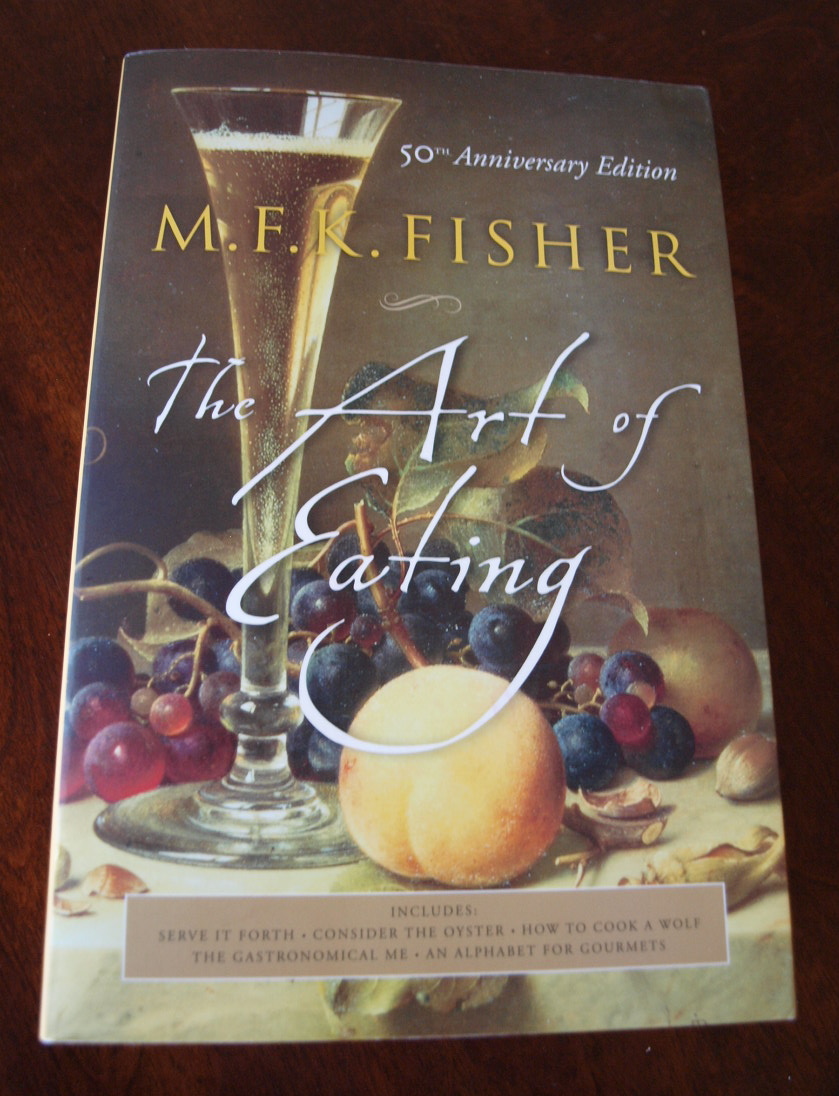
MFK Fisher is a sensualist whose prolific writing on the pleasures of the plate profoundly influenced the world of food writing today.  I’ve had a crush on her since I first read The Art of Eating over a decade ago. (I’ve since read it half a dozen times more.) I painstakingly selected the two entries I sent to the contest, intent on honoring her voice, her spirit, and her life’s work.  I wanted this.  I, the resolute pragmatist, allowed myself to believe this contest might even serve as a gateway.  With the rejection letter clasped between my cold fingers, I hated myself for my optimism.

My inner teenager shrieked and mentally threw a bucket of blood red paint on the winners’ cars.  My inner grandmother clucked and shook her head, weary of a lifetime of wisdoms.  I cried all night – a wretched, inconsolable mess, leaving behind a wake of soggy tissue and useless self-pity.  Then I pried my fists from my swollen, bloodshot eyes and forced myself to stop.  I wrote the award chairwoman a thank you note; gathered up the sour, limpid remnants of my humble pie; and moved on, jaw set, all the more determined to produce the caliber of writing necessary to place in the next award contest, which occurs in 2014.

*

My husband and I live and work at a boarding school, so, between our own children and the ever-fluctuating student body, much of our day involves direct interaction with impressionable minds.  We model our behavior and actions on those qualities we wish for others to see and learn.  It’s a stance I embrace: instructive and inclusive.  Many of the students I know have graduated but continue to follow my written work, either on Facebook or directly on the Eater Provocateur blog.  How many times have I told them to keep faith in themselves?  What would they think if they saw me curled in fetal position and wailing like a toddler on a sleep-deprived tirade?  What message am I sending my kids?

I was not born with an honest, easy sense of sportsmanship.  I suffer Scrabble poorly.  But I am trying.  I want them – my children and the students – to be strong, proud, and unafraid of facing frightening challenges, even if they don’t surmount them (though I desperately hope they will).  I want them to learn how to quickly recompose themselves after the wind has been knocked from them, and to extend a hand to those who have fallen around them.  I want them to be Davids to the Goliaths of life.  So I have to be all of those things myself.

*

Disappointment is a condiment that overwhelms the palate, rendering all things bitter and unsavory.  I am not proud of my unprofessional petulance.  In my defense, I would like to point out that a year and a half is a really long time.  Most contest deadlines range between three and six months; the MFK Award contest occurs every two years.  The anticipation kills.  Between October 2010 and the contest deadline in April 2012, I’d taken the MFK Fisher award out for many dates and we’d settled into a comfortable relationship.  I’d visualized our eventual marriage, our idyllic future.  The breakup was devastating.

The official results have not yet been published online, so it would be unethical to disclose the winners’ names.  I can say that the winners are cookbook authors, bloggers, chefs, and restaurateurs… even authors of highly regarded memoirs on the New York Times booklist.  Most of my competitors operate in much larger social and professional spheres, and have resources like agents, assistants, editors, and publishers.  Many have books of their own.  I competed against 82 talented female writers, each of us working in our own way to bring back the pleasures of the table and raise culinary awareness.

Now that the sting’s faded, I feel proud that I contended with such strong writers, especially as a newbie lacking in external professional representation.  That counts for something.  Clearly, we are all deeply passionate about the culinary world, contributors to culture and literature – also important.  But defeat is defeat, and disappointment is a key ingredient in humble pie. Other ingredients include hubris, self-doubt, lack of confidence, and a fundamental oblivion to the enormity of the odds at hand.  Humble pie pairs well with tequila.

*

I write notes to myself:

Be kind to Jules… She’s the only one of you that you’ve got!
Keep fighting!
Ambition is not a dirty word! 

I write notes to the students:

It doesn’t hurt to dream big – dreams are free!
Life is short – live each moment!
Never be afraid to show your compassion, intelligence, humor, and talent!

And yet.

I won’t lie.  I thought briefly – again, petulantly – about quitting: ending the blog, giving up on submitting essays to venues.  I thought: What’s the point? Why do I even try? I can’t go through this again!  Why is it that in a moment of turmoil, my first impulse was to abandon the passion that sustains me?  This is my forum for singing my love.  Giving up is not an option.

Doors open and doors close.  The trick, as ever, is finding the right doors to open at the right time, and never relinquishing hope that they are there to be found.
3 Comments

Filed under food, literature, travel

Crush With Buttermilk

Memories and flavors three generations deep…

I am nine years old, sitting at a picnic table on my grandfather’s patio at the ranch-style house on Winchester Street.  I watch Grandpa across the table.  His wife, Juliet, spreads out our breakfast: a brown ceramic pitcher of whole milk for us to share and a small glass of buttermilk for Grandpa; moist, freshly baked zucchini bread, cut into rectangular slices; a thick jar of apricot preserves made from last summer’s harvest; a large bowl of granola set next to a bowl of red raspberries, plucked from the bush just before breakfast and still warm from the morning’s sun.  Grandpa lowers his head to say grace.  “For what we are about to receive,” he says, pushing his wire-framed glasses up his nose, “may the Lord make us thankful.”  Liver spots mottle the top of his tanned, balding head.  “May we be mindful to the needs of others and ever humble in our service to you.”  His pale blue cotton shirt is buttoned to the top, ironed crisp and smelling of soap.  “In Christ’s name, we pray.  Amen.”  I amen a couple of beats too late.  The wind chime tinkles.  Grandpa claps his hands, smiling, and says, “Let’s eat!”  He drowns a bowl of granola for himself, then reaches across the table, gesturing to make me a bowl as well.  I nod, but add: “Less milk, more raspberries, please.”  He heaps half the raspberries onto the bowl, entirely concealing the granola underneath.  His fingers are long and shapely, his fingertips flattened by time; purple veins carve valleys from his knuckles to his wrists.  He hands me my bowl with a wink.

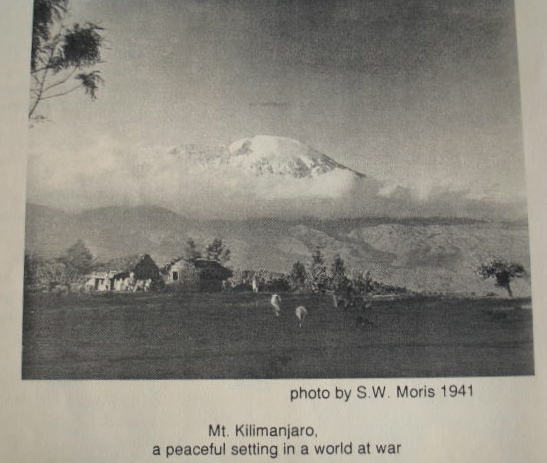
Summertime has a terrible reputation for nostalgia.  For me, summer conjures memories of my grandfather, Stanley Moris, who doted on me throughout my childhood and was instrumental in my pursuit of writing.  My mother and I lived next door to him in Boise, Idaho, for six years, and he cared for me during the day while my mother worked.  Mom and I moved to Brooklyn when I was seven, but I never stopped spending time with Grandpa, sometimes during Christmas break and always for long summer stretches.  I remember his kind blue eyes and funny faces. He had a love of learning and reading, and frequently fell asleep in his favorite brown armchair with a book folded over his small paunch.  Grandpa drove his Subaru wagon like a kamikaze pilot and was adamant that one should drink root beer with the occasional slice of pizza. He dreamt of his years in Africa in vivid detail.  I loved hearing his wild dreams at breakfast each morning.

More than breakfasts or eating outdoors, more than raspberries, granola, or milk, summertime reminds me of buttermilk, that tiny telltale cup by Grandpa’s side.  My grandfather’s love for buttermilk originated in his childhood on Minnesota farms at the turn of the last century, when honest-to-goodness churning of cream rendered the protein-laden by-product of his youth.  Sometime in between his farmstead youth on the Red River, his family’s move to Minneapolis in 1920, matriculation from a class of six medical students at the University of Minnesota, and a missionary career served in China and Africa as a physician for the Lutheran Church, the hand-churned buttermilk he knew became the commercially produced buttermilk I know: milk fortified with lactic acid to render an appealing sourness.  Grandpa continued to drink buttermilk throughout his life, despite its evolution. He drank it cold and straight.

As temperatures surge, I find myself besieged with visions of strapping, muss-haired young men dressed in plaid work shirts and dungarees, lads like my grandfather, who enjoyed raising chickens, “but not turkeys,” as Grandpa was quick to clarify; young men who fished the nearby river, hunting rabbits and ducks, and trapping muskrats and minks.  So, in order to reconnect with my grandfather and allay distracting ghosts of yore, I cook with buttermilk.  I use it to cut mayonnaise from pasta and potato salad dishes, leaving a dash of mayo as a binder and swapping the rest with tart buttermilk and spicy heat.  I incorporate it into pancakes and waffles, cakes and biscuits.  I marinate chicken breasts to make a healthier, baked version of “Malibu Chicken,” a dish that evokes post-church Sunday lunches at Sizzler with my grandparents and a rotating group of extended family.  Though he is gone, I commune with my grandfather through memories and flavors three generations deep.  I pour a glass of buttermilk and feel nine again, laughing outside in the early morning sun, in a time before I knew about anything much at all except maybe my grandfather’s love.

4 Comments

Filed under food, literature, travel

Sweet Tea


When the summer storm subsides, I creep around in the evening air, taking photos of flowers bathed in the golden light of the setting sun, their petals resplendent with drops of rain. The gray sky recedes.  My mother-in-law, Zora, smiles when she finds me huddling by the rose bushes, camera in hand.  She leads me beyond her front yard, across the street, and onto her neighbor’s curved driveway.  Zora assures me that her neighbor won’t mind, so I snap away.  Zora points out beautiful blossoms and adjusts the blooms, moving them to the right, left, up, or down to create prettier shots for me.  Wrens wave their tawny tails at us.  Cardinals flit from the undergrowth.  Water laps against the red clay bank that surrounds the neighborhood lake.  I photograph incandescent yellow lilies, ivory magnolias, serrano chili pepper plants, mauve cornflowers, and her neighbor’s collection of miniature birdhouses, which hang on cedar fence posts – a constellation of hospitality venues for small finches and songbirds.  I photograph Zora: fuchsia lipstick on curvaceous full lips, short dark curls, white shirt with blue stripes and matching navy shorts. For the first time in a very long time, I feel right again.

It’s not just the rush of trespassing with my mother-in-law; nor is it the blessed salve of South Carolina’s humid June air on my frosty, sun-starved Utah skin.  I feel right among the area’s lush green foliage: the electric pink azaleas, globes of blue hydrangeas, and billowy, purple butterfly bushes; the crested blue jays, robins, and yellow-headed finches; the squirrels, tails twitching as they ferret away acorn stores…  I feel right that Zora stands by my side admiring this landscape with me.

Zora’s lilt enchants me: rounded sounds born of the rural South, recounting tales of putting up fruits and vegetables for the winter, picking watermelons from the vine, or driving out to visit the cows.  Expressive blue-green eyes punctuate her words as she describes how her mother loved to tap dance.  (We both aspire to tap too.)  From our hundreds of conversations, I have adopted several of her sayings and mannerisms.  I catch myself all the time: Quit!…  I might could…  I’m fixin’ to…  I reckon…  Fourteen years of southern inculcation has taught me the respectful utility of the phrase Yes, ma’am, though Zora has yet to scold me for my habitual disuse.  Zora stops mid-sentence to hug me, whispering I love you.  She calls me darlin’, honey, and sweetheart far more often than she calls me by name, a habit I’ve formed with my children.  I address her as Mom Z; to my children, she is Gran Z. We all steep like sweet tea in Zora’s radiant light.

Zora influences me profoundly in the kitchen.  We love to talk shop.  She indulges me as I record her recipes, my fingers typing furiously to catch each step of her work.  How many bananas do you use?  How much sour cream?  Brand or generic, and if so, is there a specific company or store you prefer?  She continues her work as she answers my barrage of inquiries.  A smile forms in the crook of her right cheek.

“Look at this,” she says, nudging two hard-bound, jade colored books across the table: a two-volume set called Meta Given’s Modern Encyclopedia of Cooking, originally published in 1947.  “Meme just gave them to me,” says Zora, winking.  “She’s had these so long, we just call them the green cookbooks.”  (Meme is the 91-year-old Hartley matriarch.  Everybody giggles when I inevitably fail to pronounce her name correctly.)  Zora thumbs through the stained, yellowing pages of the second volume.  “See this?  It’s a set of two, but the index for both is in this one,” she says. “Let’s see what this has to say!”

On the first pages, I read: “Mealtime is more important than many women realize, not only physically, as the time for refueling the body, but emotionally as well, as the time when the whole family gathers together to enjoy each other as well as their food.”  Zora embodies this philosophy.  Mealtimes are for sharing communion and company.  Zora prepares eggs, grits, sausages, and fruit for breakfast before anyone else has woken up.  She chides those who depart the meal a few minutes early to help with dishes: “Now, honey, don’t worry about that!”  She saves vegetable scraps for the wild rabbits in her backyard, fortifies the soil of her plants with eggshells, and champions recycling and composting, a resourceful remnant from her childhood on the farm.  She reveres the vitality of things grown in the earth, offering me tastes of her first tomato, juicy and sweet, and succulent halved figs from her prolific tree.  A born adventurer, Zora shares my curiosity for food: Did they coat the fried okra in flour or corn meal?  What’s that secret kick in the low country shrimp boil?  Have you ever made chocolate cake with cola?  I never feel like a food-loving geek in her company.  Did I mention that she is an incredible cook and a masterful improviser?

“If you’d like, those might come to you one day,” says Zora, eyeing me as I gape at the green cookbooks’ color photography.  “That’s pretty beautiful, especially considering how old these are,” she adds. I nod and mutely think: priceless, heirloom, treasure, love.  I think: azalea, hydrangea, butterfly, bee.  I think: New York, South Carolina, Zora, me.  As I leaf through the cookbooks with Zora so close by, warm, grateful rightness steeps warm amber in my soul.

5 Comments

Filed under food, literature, travel

Orange Crush

Potent medicine.

Cold, bitter wind howls through the valley, obscuring the outlying mountains with a thick haze of grey dust and rain. We huddle together in the large tent, thankful for cover and focused on staying warm as our hair whips around our faces.  Our cheeks are cold, our noses red.  The tent’s white walls flap crisply in the gusts.  Hail pelts the grass.  We struggle to hear the person standing at the tent’s doorway, the sage who determines our path for the day: a high school student robed in white.  This is graduation.

I’d been sick all week, rendered useless by a sore throat that prevented me from sleeping and brought me to the brink of tearful hysteria in a doctor’s office on the Friday afternoon prior to graduation.  On Friday night, I ingested a quantity of medication sufficient to incapacitate a horse.  I slept for the first time in days.  On Saturday, I still couldn’t talk, my throat raw, but at least I felt enough like a human being to attend the graduation ceremony and show support to several of the students I’ve come to love in the intervening years: among them, a wildlife photographer, a psychologist, an artist, a bioengineer, a physician, a filmmaker, a pediatric nurse, and the next Anderson Cooper.

I expected to cry at graduation, though I didn’t (much). I expected the usual post-graduation catharsis, the palliative knowledge that these students now face one of the most exciting chapters of their lives.  The catharsis has yet to appear.  I expected my bleak mood to subside, but it lingers.  A week has passed since graduation, and still I feel low desperation clattering around in the cage of my heart.  Traditional medicine isn’t helping, so I’ve been working on alchemy of my own – making tinctures and salves in the kitchen with oranges.
*
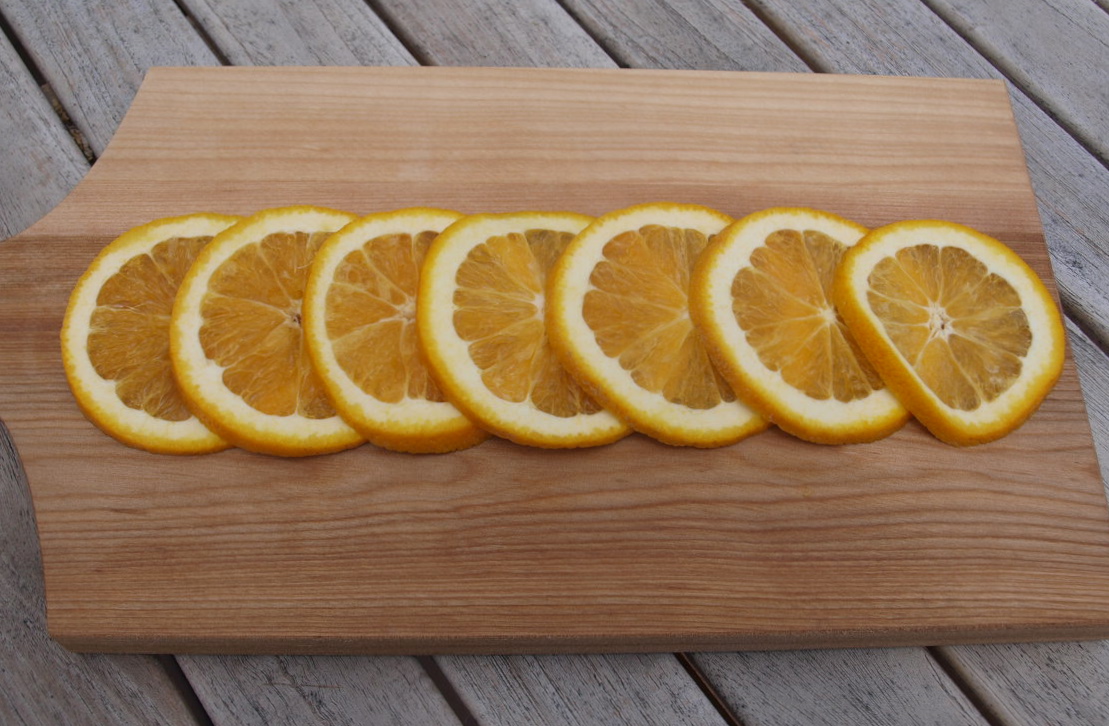
The heady seduction of an orange: kneading and working the unmistakable waft of essential oil from the crenelated peel; undoing the peel and stripping the pith from each curvaceous segment; using fingers and thumbs to split the sphere into halves, pulling the segments away one at a time; savoring the sweet pop from each bite, the juice squirting from the pulp.  My children share my fondness for oranges in more innocent terms; I scarcely finish the process of peeling when they appear at my elbows, their hands outstretched in anticipation.  I like to slice oranges into wheels, translucent and varied as stained glass.  I like it most to share an orange with an unsuspecting friend.  The gesture is always well received.  After all, oranges have evolved to be shared.  Easily transportable, hygienically enclosed, filled with individualized pulp “packs” to soothe those wary of germs, the orange can be enjoyed on the beach, at a park or picnic, on the train or on the hills.  It represents fragrant, ubiquitous communion.

Oranges are so inextricably grafted to my tree of memories that one fruit can’t be picked without shaking down many others – pouring orange juice as a girl and fainting on the kitchen floor (chicken pox); eating Dreamsicles when I had a sore throat; administering orange ibuprofen suspensions and lukewarm baths during my son’s fevers; watching my friend, Casey, outside St. Patrick’s Cathedral, as she lost herself in reverie over a slice of candied orangette from Teuscher Chocolates of Switzerland.  I’ve read that the medical industry employs pectin derived from oranges and other citrus fruits as a thickening agent.  In this sense, oranges are vehicles for healing.  I believe it.  As a composite, oranges transmit the optimism of healing and companionship, the hope that things will improve over time, and the wish that somewhere, sometime, everything will be all right.
*
My father recalls flying overseas with my brother and sister when they were little children.  Someone – a flight attendant with a penchant for mischief, perhaps – gave my brother, Nathan, a cup of orange soda.  Nathan spent the remaining hours finding inventive uses for the fruit served to him on flight.  Though this event happened years before I was born, the mental image is Classic Nathan.  I envision his impish face: shining blue eyes beneath a fringe of dusty brown bangs, a striped four-year-old blur cackling as he lobs oranges down the center aisle. Bonsai!

Orange soda has not yielded such dramatic effects in my life, though its radioactive hue is as emblematic of summer to me as the first ear of the season’s sweet corn.  Normally a color reserved for use in roadwork, orange bursts from the freezers and chill chests of summer.  My children use Summer Orange Dye No. 1 to stain their lips, chasing each other around the backyard: “I am the orange monster!  I will gobble you up!”  It’s a color I intrinsically link with hot summer days, sitting on the back steps outside the kitchen, gnawing on crystalline popsicles and wiping drips from my children’s chins.

I’ve diagnosed my ailment.  I suffer from toxic orange mood disorder, an illness that prevents its victims from finding closure and ultimately leads to deep depression in tenderhearted individuals with a history of dwelling on the past.  How did I allow myself to let so many students start to feel like children of my own?  How is it possible to feel so simultaneously proud and sucker-punched?  How many days will elapse before this wretched feeling passes?  I want to set popsicles afloat on some imaginary river, let fiery little rafts of caution drift and meander toward this latest group of graduates: Know yourself!  Life’s too short – live every minute!  Don’t waste your time with haters!

Summer is here and graduation is over, and I am stuck on these back steps, peering down the driveway at the specter of a girl in a shimmering white robe, receding into the distance with soft steps, laughter tinkling in the air, the orange tassel of matriculation waving another bittersweet farewell.

2 Comments

Filed under food, literature, travel

The Buzzkill Diet

Life is short. Stop the insanity.

All of the men in my immediate social circle are on diets.  Some of the women are too.  They’re ramping up their exercise routines, and going for longer walks and bike rides.  They’re encircling their biceps, waists, and thighs with measuring tapes.  Shared mealtimes have generated extended discussions about the evolutionary differences between the male and female anatomy.  The men concede that they are, as a gender, luckier than women, who, as a gender, find it more difficult to lose those last few pounds because of the dictates of our respective genes.  It’s a little squirrelly to overhear the guys swapping calorie facts, but overall I respect my friends’ resolve.

I’m pondering their diets as I sit down to a dinner of habanero-deviled eggs, a few slices of Irish cheddar and pear, and a glass of red wine.  I do not diet.  The very word makes me ravenous.  I run when I can, and I try to stand up and move around every hour or so, because I’ve read that this will prolong longevity. My weight remains constant, and I’m okay with a little extra curve.  Heaven help the unwitting soul who makes the mistake of trying to recruit me to a stricter diet and workout routine.  Food is the only variable in life that I can completely control.  I eat what and when I want.

MFK Fisher, my idol and muse, writes: “One of the stupidest things in an earnest but stupid school of culinary thought is that each of the three daily meals should be ‘balanced.’” Fisher, an outspoken opponent of the “sad rigmarole” of “three daily feedings” based on static, uniform “conditioned appetites,” suggests an alternative approach to eating.  “Balance the day,” she writes, “not each meal in the day.”  Moreover, she proposes the radical notion of enjoying the food we eat: savoring each bite; lingering over textures, tastes, and smells with sensual appreciation. I wholly ascribe to her philosophy.  Sometimes dinner is a briny salad of butter lettuce heaped with sliced olives, red onion, tomato, feta, and Dijon vinaigrette.  Sometimes dinner is the cheese course; sometimes a hunk of boule, ripped from the still-warm loaf.  Though I’m trying to eat less meat, I readily partake of the power player known as bacon and indulge in the luxury of a great rib eye.  Since I have yet to contract pellagra or rickets, I believe my diet is reasonably sound.

Is it better to eat three nutritionally-composed meals a day, or to experience the high from eating a terrific plate of what you love the most and filling in the rest of the day with foods that balance it all out?  Sensible is sensible.  But no one receives an award for sensibility.  St. Peter doesn’t slap a golden certificate in your palm when he meets you at the Pearly Gates.  When I die, I would rather my friends remember me for my marathon cookie sessions or my spicy guacamole.  I’d like them to think of all the dinner parties, wine, laughter, and Dance Central battles.

I am baffled by the masochism of ignoring cravings, a twisted agony of will that has caused many a person’s dietary downfall.  I succumb to cravings because I have a relentless single-mindedness about food, and if I do not cede to my cravings, they consume my senses until I do.  I lose touch with reality.  I obsess. If every cell in my body is screaming for a piece of fried chicken, then my body must be in need of this coveted protein.  My cells sing for all kinds of foods: artichokes, Gouda mashed potatoes, mountains of fat blueberries resting on mounds of tart Greek yogurt.  I give in, and it frees me of my obsession.  Peaceful accord restores my glow.

Fisher lived through war, food rationing, and times of widespread hunger.  She makes a strong case for mindful eating from the standpoint of multiple economies: financial, domestic, and emotional.  “Breakfast, then, can be toast,” she writes, offering one example among several other hypothetical meal suggestions for the day.  “It can be piles of toast, generously buttered, and a bowl of honey or jam, and milk for Mortimer and coffee for you.  You can be lavish because the meal is so inexpensive.  You can have fun, because there is no trotting around with fried eggs and mussy dishes and grease in the pan and a lingeringly unpleasant smell in the air.”  I don’t particularly mind frying eggs and dealing with dishes, but I agree with her underlying point.  Simplified, unstructured meals cost less money and demand less clean up.  This, in turn, encourages overall emotional wellbeing and heightened satisfaction from the foods we eat.

If, one summer night, I eat a bowl full of sweet, ripe tomatoes and wash it down with a bottle of my friend’s homemade apple cider, my meal might cost me $2, as opposed to $1.50 for a chicken breast, $3.48 for salad fixings, and $1.69 for a package of dinner rolls.  (Adding the family to the equation complicates the meal plan further, driving up costs and time spent catering to their preferences, but you get the gist.)  Cheese is my costliest indulgence.  It is worth every cent.  You can’t put a price on cheese-related euphoria.

I started writing this essay in response to one particular male, who, in addition to adopting a(n enormously boring) diet, is also fasting twice a week and smells faintly of peanuts.  His approach strikes me as full-fledged lunacy, but it works for him.  (Since he also happens to live in the same house as me, I cringe and bear it.)  I prefer to follow the approach of a gracious grand dame who lived a long, sensual life, eating as she pleased and writing some of the most rapturous, compelling food literature in existence.  I think of Mary Frances every time I raise my glass. “Try it,” writes Fisher of her philosophy.  “It is easy, and simple, and fun, and – perhaps most important – people like it.”

3 Comments

Filed under food, literature, travel

Ladies Night

It's where all the cute chicks hang out.

There are cars in every single parking spot at the hardware store.  Cars are wedged on the grassy patches between the lot and the highway, overflowing into the Family Dollar parking lot next door, and stretching past the lumber area in makeshift spots along the sides of the road.  As Mitzi maneuvers the party bus (AKA her minivan) onto the grass, my friends and I see a long line of shoppers waiting to enter the store.  More cars pull in behind us, searching out free spaces in which to park.  It is a balmy spring evening in Mount Pleasant.  We have arrived at Ladies Night at the hardware store.

On Thursday, April 19, 2012, Horseshoe Mountain Hardware hosted its first Ladies Night.  The store closed its doors to the general community at 6 p.m., and admitted only women until the night was through. The turnout was prolific.  Women of all ages came in droves for the event, which smartly married sound marketing with the feminine pulse.

Contributed by John Peel. Thank you!

The people working the front door handed out free pink Ladies Night t-shirts.  Employees in the paint section offered hands-on instruction in artful textures and finishes.  Ladies in the garden area created their own tiered herb pots.  A chocolate fountain flowed, surrounded by an array of fruits, crackers, and other dipping items.  Another table offered éclair puffs and fresh, diced fruit.  Displays of lotions, scarves, and jewelry accessorized the aisles.  Four violinists and two cellists, formally dressed, replaced the power tools in the center of the store.  Their musical performance was eclipsed only intermittently by powerful zaps and squeals at the stun gun table.

Beauty waylaid my green-thumbed friends in the tented, sun-warmed garden area. They amassed small forests of potted plants around their feet as they contemplated flowerbeds full of snapdragons, lilies, and petunias.  Since I was born with a congenital case of murderous thumbs, I sought out a shopping cart in which to transport their verdant blooms.  My friends cheered when I appeared with an empty cart.  They loaded the cart with colorful flowers for their garden beds and fragrant herbs for their kitchens.

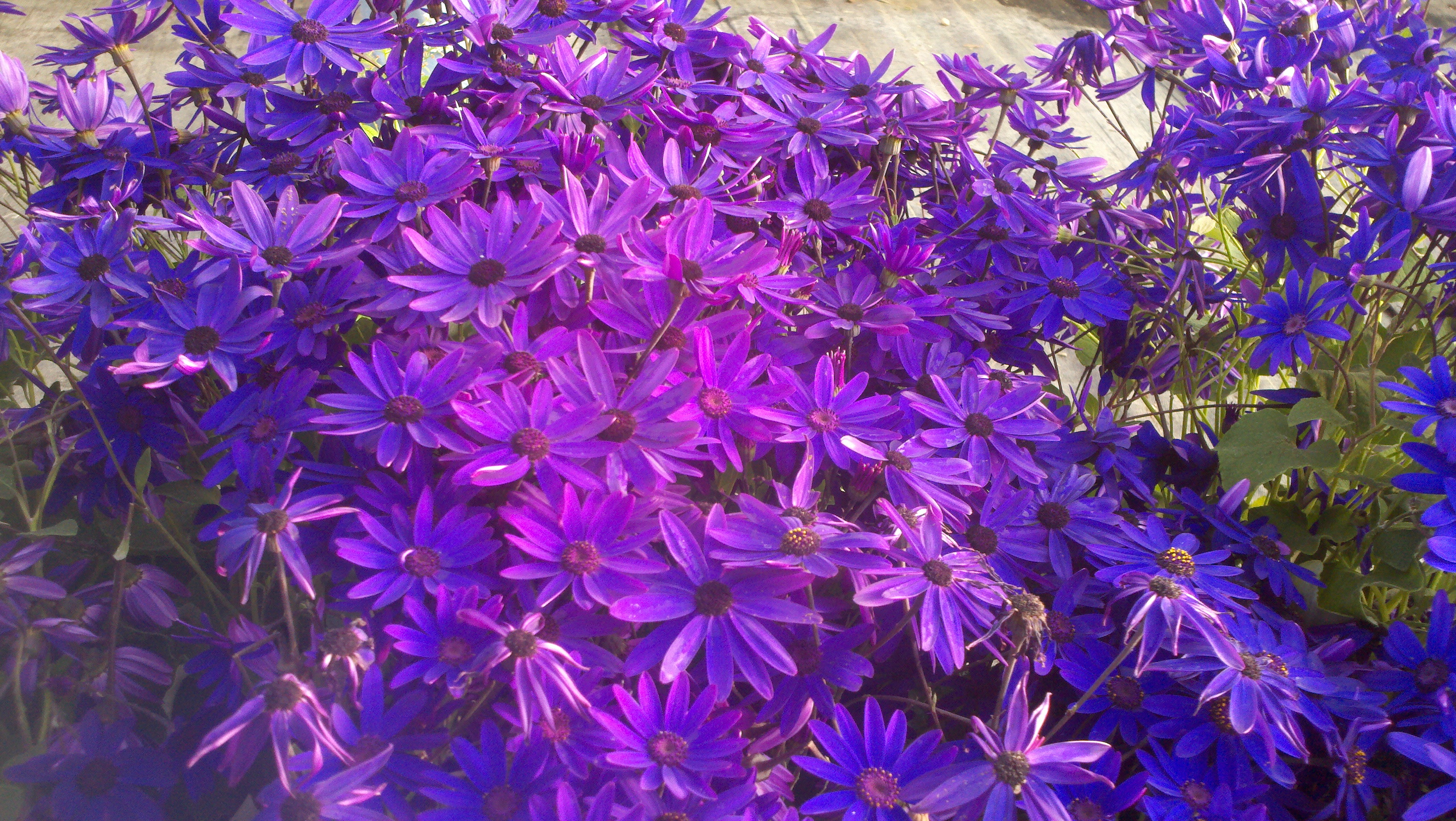
My friend, Casey, bought several vibrant blue senetti, which look like daisies whose roots have been plunged into deep violet ink, the rich imperial hue traveling through long, green veins to saturate the blossoms.  As we wheeled the flowers through the store, an admiring customer by the key kiosk exclaimed: “Look at that color!”  A pink-clad employee standing nearby nodded in agreement, adding: “Unreal, right?”  Several others admired the senetti as we passed them. They immediately turned towards the garden center door to acquire senetti flowers of their own.  I always knew my friends set trends.

Casey won a snazzy, hot pink fishing pole in the evening’s culminating giveaways.  I lovingly stroked my new taser.  We all laughed together as we stood in line to check out.  We received complimentary pansies as we exited.

I spoke with the store’s owner, Glen Peel, a week later.  Mr. Peel is an amiable man with brown hair, tan skin, and an appealing Western drawl.  He devoted his full attention to me as we talked – such a refreshing change from my backlog of condescending experiences with the unhelpful employees at a certain home improvement mega-vendor whose name also starts with H.  Mr. Peel told me a little about the store’s history. The original Horseshoe Mountain Hardware opened on Main Street in 1995.  It moved to its current, more prominent location along Highway 89 in March of 2002.

Mr. Peel expressed his delight and gratitude over the turnout for the store’s first Ladies Night, which offered many items at cost and many others at significant discount, in addition to the food, t-shirts, door prizes, and giveaways.  As someone who wholly believes in the importance of local consumerism, I’m thrilled that the event was received with such enthusiasm.  Ladies Night opened a critical door to the women of Sanpete County, encouraging them to cross into the “traditional” realm of “masculine society” and get their hands a little dirty.  This, to me, was the heart of what made the evening such a memorable success.

Ladies Night is not a new concept, of course, but Ladies Night at Horseshoe Mountain Hardware rocked our small town like a much-needed high voltage revelation.  I loved the evening’s novelty and its great energy, so I was pleased to learn that Mr. Peel plans to make Ladies Night an annual tradition.  He welcomes suggestions for improvement, so don’t hesitate to share your ideas if you have any in mind.  Next year’s Ladies Night is tentatively scheduled for April 18.  I can’t wait.

2 Comments

Filed under food, literature, travel

Garden Reverie

Here comes the sun.

The trees that surround our house have sprouted small leaf buds. The birds are back.  Each morning I wake to their enthusiastic trill as they scavenge in the grass hunting for their breakfasts.  The robins returned first, hopping around, determined to locate worms in the damp soil, the earth newly released from a crunchy crust of snow. Gangs of small finches with yellow and green breasts flit over my neighbor’s alfalfa fields; mountain bluebirds alight on barbed fences. The woodpeckers have returned to begin this year’s carpentry projects. Tulips and daffodils unfurl in the front yard, splashing the dirt with pops of yellow, purple, and red. Grass sprouts again.  My neighbor, Matt, has inquired if I’d like him to mow the lawn.

I refuse to allow myself the hope that spring has arrived. Where I live, snow flurries and hard frosts are common, though thankfully not frequent, until early June.  I’ve fallen sucker to springtime exhilaration too many times before.  Though the birds and flowers seem to indicate otherwise, it’s only a matter of time until that next soul-crushing snow flurry cakes the grass with sticky, wet sleet.  I think of the robins.

*

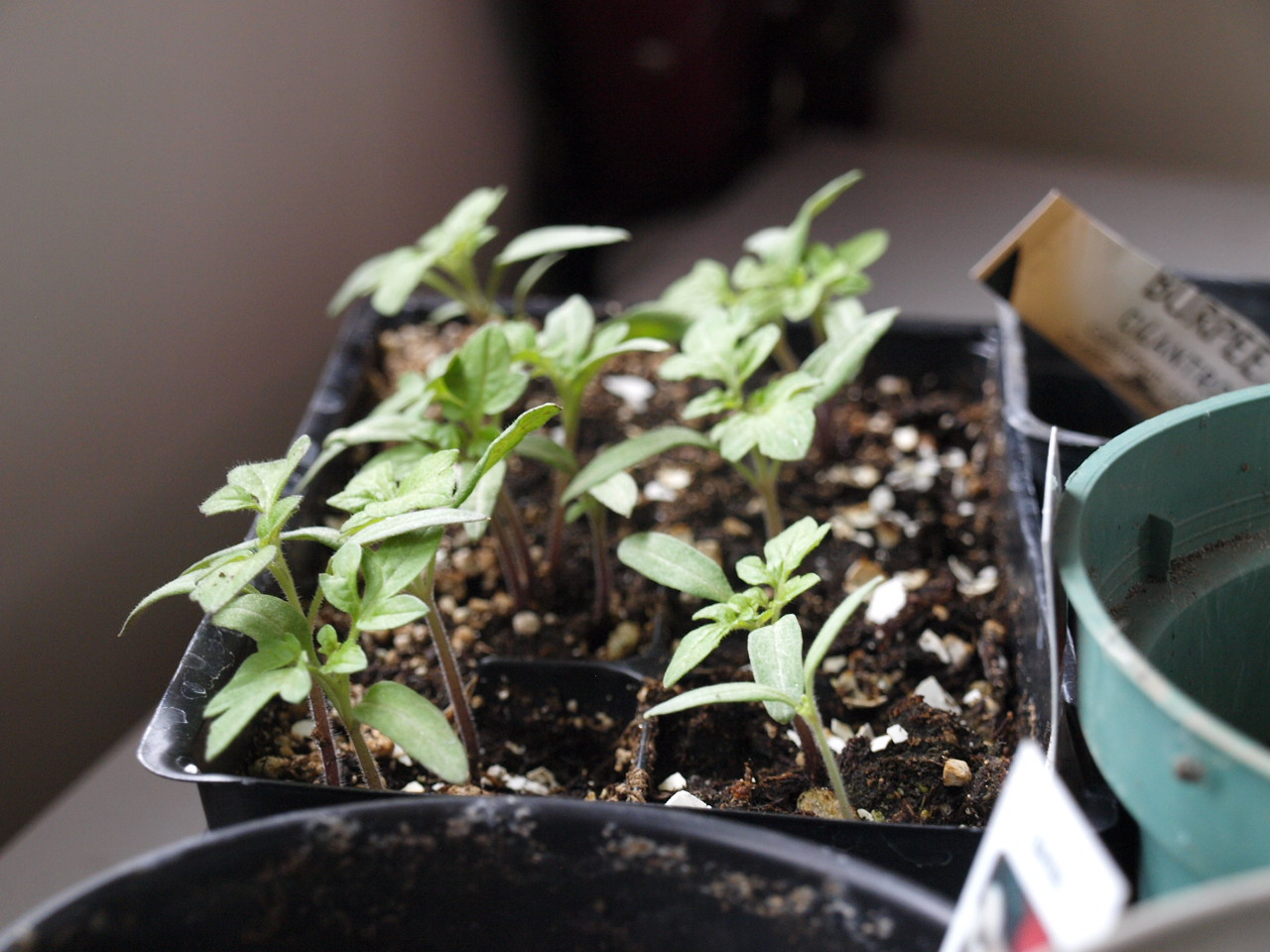
In acquiescence to the unique meteorological attributes of our high desert town, I’ve started my garden plants in the ‘cold room,’ where we keep our washer, dryer, snow pants, hats, shoes, and a large freezer that we have yet to plug in.  The cold room was added on to the house at some point in its nearly 100-year history, and, as the name implies, it is not connected to central heating and is therefore very cold.  But it is the only space with sufficient west-facing real estate to capture the sunshine.  (I have very little south-facing space, so the western aspect will have to do.)  I heat the cold room with a small space heater and try to keep my herbs and plants alive through the long, taunting winter.  I also use the cold room to start my garden.  It is imprudent to put garden plants into the soil outside until mid-June.  The risk of snow is too high.

*

Last year, my tomato plants died. We transferred healthy, little plants into the raised beds in the front of the yard, where they received the full warmth of the sun all day.  They budded small flowers, and then, despite the sunlight and copious water, the leaves yellowed and slowly withered.  I could not save the plants.  I was heartbroken.  Several people consoled me, saying that it wasn’t my fault.  It was a bad year for tomatoes. Ghosts of the tomato plants haunted me all summer.  Thank goodness for the Farmer’s Market and for a friend, whose cherry tomatoes proliferated and who graciously offered to share her bounty of yellow and red jewels.

A tomato plant is a garden’s delight.  I adore the scent of tomato leaves as I peek in search for new buds, prune the existing buds to ensure even, sustained growth, and monitor the small fruits that replace the buds.  I love the heft of the young tomatoes in my hand, the sun-warmed flesh.  I feel like I’ve won the lottery each time I pick the ripened fruits, making a basket of my shirt to squirrel them into the house.  Garden tomatoes are nothing like their cardboard counterparts at the grocery store.  Garden tomatoes are unparalleled in flavor, sweetness, and juiciness.  They provide the ultimate umami.

I’m not taking any risks this year.  I’ve planted San Marzano seeds in organic soil beds in an old egg carton.  I placed extra pots in every available sunny spot in my house.  I also bought a tray of the La Roma II variety, started at the hardware store.  Their thin stalks bow to the afternoon sun.  I planted sweet, organic large-leaf basil; rosemary; Greek pepperoncini; jalapenos; sweet peppers; cilantro; radishes; sunflowers for Rory; and, in extreme defiance of the short growing season, crimson sweet watermelons.  The sunflowers, summer’s statuesque revelers, have already started to sprout.

The proto-garden sits atop the freezer and waits for the western sun.  I whisper to the tomatoes: Please, please grow.  I can’t bear to spend another year without you.

*

The sight of the robins bolsters me.  I consider their beauty as I pull weeds from the front yard: their bold orange breasts, the pale rings that line their black eyes, the mottled flecks of their delicate blue eggs.   It’s difficult to resist the allure of anthropomorphism.  Though I know the robins hop by dint of biology, they seem so cheerful, so determined… but in an amiable way, like cheerleaders for Team Spring.

I grew up in a Brooklyn neighborhood where the buildings and streets were dirty and gray.  Green spaces thrived in the care of others: honeysuckle, fragrant and sweet, twined on fences in Seagate; tree-lined Ocean Parkway, dense with flowers and leaves in springtime; and Asser Levy Park, where my mother and I ate piroshky after long mornings of grocery shopping on Brighton Beach.  My apartment building grew no gardens, and I certainly didn’t have the opportunity to work the soil myself.  Cultivation is new to me.  This summer marks my fourth year of gardening education, and, though my firsthand knowledge has improved greatly, every year I learn more.  The plants teach me their visceral secrets.

I think of my childhood as I huddle on my knees, grasping for the renegade weeds in the farthest reach under the thorny shrub by my front door.  The younger me had no idea that this is where she would find herself: on her knees in the dirt, cursing stray branches and looming wasps, surrounded by robins rooting in the grass.  She didn’t know what it meant to provide care to other things, much less raise them.  But, as she checks the moisture in the pots, switches on the purple UV light, and peers lovingly over her plants while tucking her green babies in, she allows herself a brief moment to believe that somewhere amidst the soil sprouts a tiny seed of optimism.

Leave a comment

Filed under food, literature, travel

Vive la France!

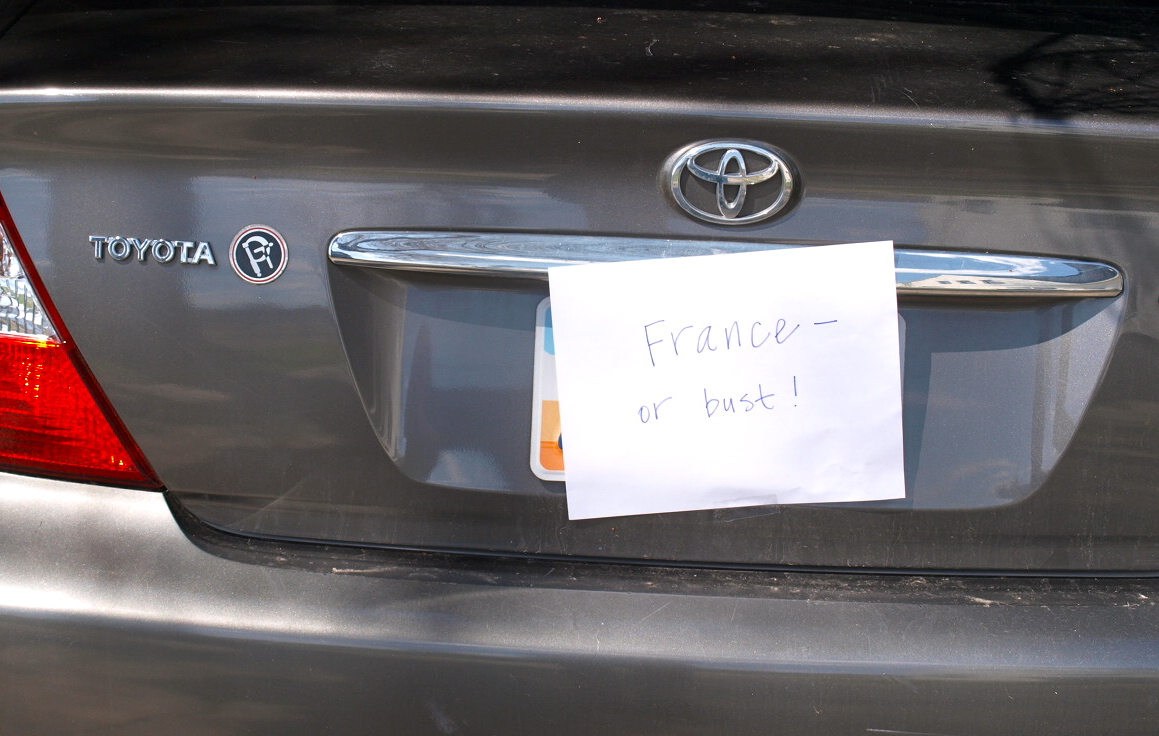
Peter Mayle lives in France and I do not.  He infects me with an acute and incurable case of Francophilia, and then he leaves me to fester away as he sips glorious rosé and saunters to his backyard swimming pool to cool his sunbaked skin.  Every day presents Mayle with an opportunity to observe the quirks and contradictions of the Provençal soul: every cheek kissed, every waggling mustache and gesticulating hand, every mais oui.  Mayle roams the idyllic countryside with his dogs.  He has uninterrupted access to baguettes.  Life is not fair.

Of course, Peter Mayle isn’t the first writerly person to succumb to the charms of France. Gertrude Stein, Ernest Hemingway, A.J. Liebling, MFK Fisher, Julia Child, James Villas, Adam Gopnik, David Sedaris, David Lebovitz, and Molly Wizenberg have also documented their love for France, so I shouldn’t hold Mayle solely responsible for my malaise vert.  Mayle believes that Provence has the curative power to relieve writers of the “daunting confrontation” of “the blank page.”  Mayle treats his own writerly “ennui” with “two or three hours of walking in the hills…  The happy combination of exercise, sunshine, solitude, and glorious scenery has such a tonic effect” that he returns to the work of writing with “renewed optimism.”  Even if I had the luxury of two hours in which to roam the plentiful hillside, which, incidentally, is crusted in deep snow from October to July, I doubt the solitude would similarly inspire me.

The true source of my frustration isn’t Peter Mayle.  I too would be on the first plane to France if I had the motive and financial wherewithal.  I am frustrated by the limits of my imagination.  Writers are told to write what they love, but I’m discovering that love only stretches so far.  Writers need stimulation: opportunities to observe, interact, and experience things.  Geography also plays a critical role in the interpretation of one’s days.  I live in the high desert of central Utah.  Though the area is classified as “desert,” I am surrounded by mountains that are lush with alpine vegetation and animals hardy enough to thrive at high altitude.  The snow-capped mountain crags are breathtaking; the fierce pink sunsets cast rose-colored rays over the outlying alfalfa fields.  I suffer no shortage of natural beauty.  But I write as Eater Provocateur, not Alpine Provocateur.

Mayle’s total love of place, character, and history ensures that he writes what he loves and, moreover, he lovingly writes.  If a Provençal acquaintance so much as utters a stray zut, Mayle captures it, rendering the moment in smart, engaging prose, like an anthropological rhapsody.  He embraces “big” personalities; they are the characters that bring brilliant color to Mayle’s writing.  There is Ramon, the plasterer, who drinks a succession of beers as he lies on his side, refinishing the ceiling.  There is gruff Massot, whose distaste for German tourists borders on obsession.  There is Monsieur Gu, “a genial, noisy man with the widest, jauntiest, most luxuriant and ambitious mustache [Mayle has] ever seen.”

My passion is food, and I do sometimes struggle with where I live because of limited access to quality ingredients and larger grocery offerings.  I get especially cranky about three ingredients: fresh mozzarella, Brie, and baguettes, and this is where Peter Mayle enters my web of frustration.  I realize that I can make my own mozzarella and, should the baking gods ever grant me their favor, baguettes.  I realize that these three foodstuffs have relatively short shelf lives, decreasing their potential to raise my grocer’s profits.  I realize that it is pointless to fight the palates of the majority when clearly I am the single person who comprises the minority.  I nevertheless feel like it is a sin that there isn’t easy access (i.e. less than a two-hour drive) to these three basic delicacies.  I bet Peter Mayle can procure these within minutes of his Provençal home.  Therein lies my indignation.

My family moved to central Utah four years ago, lured by careers in education. We became quickly ensnared by our love for the students at the school where we work.  Relocation is not an option at the moment, so despite my epicurean complaints, I must abide by the area’s constraints.  To be grudgingly honest, I value our location for its safety and moral fortitude.  My children are cocooned by this relative isolation.  They will grow up with memories of camping, hiking, and skiing; they will have knowledge of wide, open spaces and a healthy respect for nature.  We live each day surrounded by resplendent Rocky Mountain glory.  But, oh, what I wouldn’t give to inhale the salty, doughy scent of a freshly baked baguette, to rip apart that lovely bread flesh.

Mayle counters: “For more lively inspiration there is the café, a paradise for observers and eavesdroppers… There is an ever-changing visual accompaniment, since conversations are decorated with nods, winks, shrugs, moues, and expressions of astonishment or outrage, often with minor explosions of even more dramatic body language.”  This would be much more fruitful fodder, but, alas, where is my bustling café here in this Utah valley full of predominantly non-coffee drinkers?  Where is my Didier, my Faustin?  Where is my Massot, “chewing at his mustache in vexation”?  I adore colorful, oversized characters; I revel in their light like an enraptured moth.  I also have this weird, superstitious, personal rule not to write about the people in my immediate social circle unless they give me express permission to do so.  (It helps ensure that they remain my friends.) And so, I search for characters in the outer world.  I befriend farmers, grocers, and gardeners, but the pace is slow, the personality rewards subtle.  The law of averages delivers its harsh decree.

The other night, after a particularly painful bout with my ailment (roughly 60 pages into Provence A – Z), I dreamt that I was traveling in France with my friend, Casey. (Casey has enthusiastically given me permission to write about her, affirming her consent by saying, “It’s about time!  I thought you’d never ask!”)  A horde of young French schoolboys descended on us, each wearing matching outfits and chic red scarves tied around their necks.  They separated us.  I lost sight of Casey.  Unable to fight against the press of the crowd, I matched their brisk pace and found myself in the home of a bushy-haired Frenchman.  I instinctively knew that he was a photographer.  He sat at a table in the center of a large storeroom, drinking wine, a cigarette dangling from underneath his full, salt and pepper mustache.  Edith Piaf warbled from a small radio by his side.  “Excusez,” I said, immediately recalling David Lebovitz’s etiquette suggestions for visitors to France.  I began again.  “Bonjour, monsieur!” I said, flashing my brightest smile. “Ça va? … Er… Excusez-moi, mais je….” I devolved into tearful English as I explained I’d lost my friend.  What should I do?  The photographer disappeared momentarily behind his plume of smoke.  He reached behind him, pulling out a plate of cheese and pushing it towards me on the table.  “Seet, chèrie,” said the man, his eyes twinkling mischievously.  “Eat.”

Postscript – Lebovitz’s book, The Sweet Life in Paris, is an excellent (and very funny) preparatory read for those embarking on a trip to the city of love and lights.  If, on the other hand, it’s the southern French countryside for you, go with Mayle’s Provence A – Z.

1 Comment

Filed under food, literature, travel

Party Days

Let's party!

In my family, spring is more or less a continual opportunity to celebrate a string of birthdays that begin on March 4th and end on April 18th.  So, between consulting gigs and birthdays and instead of testing out recipes for single meals, I’ve been cooking on a mass scale and hosting a lot of parties.

I seldom need an excuse to throw a party.  It’s Thursday?  You like purple?  Let’s party!  When I watched Daniel Holzman and Michael Chernow – the chefs from The Meatball Shop – on Chelsea Lately in January, I knew that it would only be a matter of time before I hosted a meatball party.  My daughter, Rory, who shares my suggestibility, eagerly co-opted the meatball party idea for her fifth birthday.  Though Laurie Colwin, who writes of the birthday tea party tradition she shares with her daughter, had already sold me on a tea party for Rory’s birthday, Rory was so sunny in her hope for meatballs that I couldn’t refuse her.  And then I thought, Why not do both?

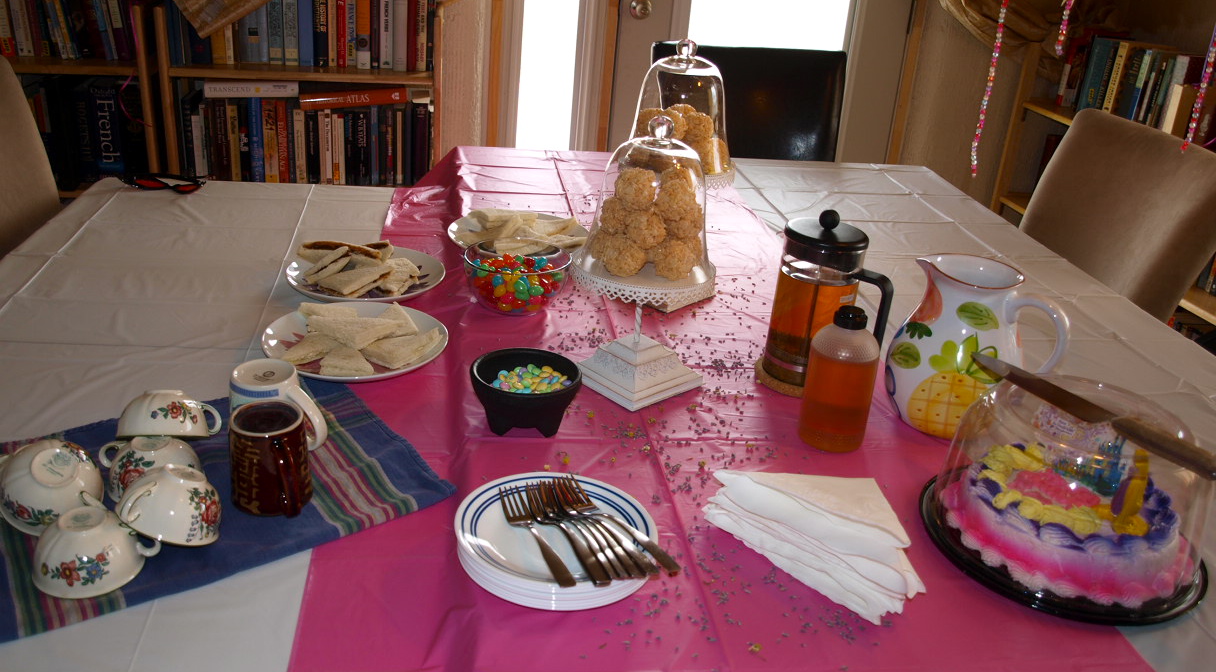
By the time Rory turned five, I could barely contain my excitement.  We celebrated last week.  Rory invited four friends (and her big brother) to a princess tea party that was so civilized I almost laughed.  I prepared three types of tea sandwiches: coconut and lime curd, peanut butter and Nutella, and honey with banana slices.  I molded rice crispy treats into small spheres, and served them with chamomile tea and raspberry lemonade.  I learned several interesting things from the giggling guests, including the merits of having a younger brother, the versatility of bird poop, and the hilarity that underlies British accents.  Rory opened her presents, my husband extracted quarters from behind the ears of the guests, and the tea party concluded with a rousing jump on the trampoline in the backyard.  Laurie Colwin, you are a genius.

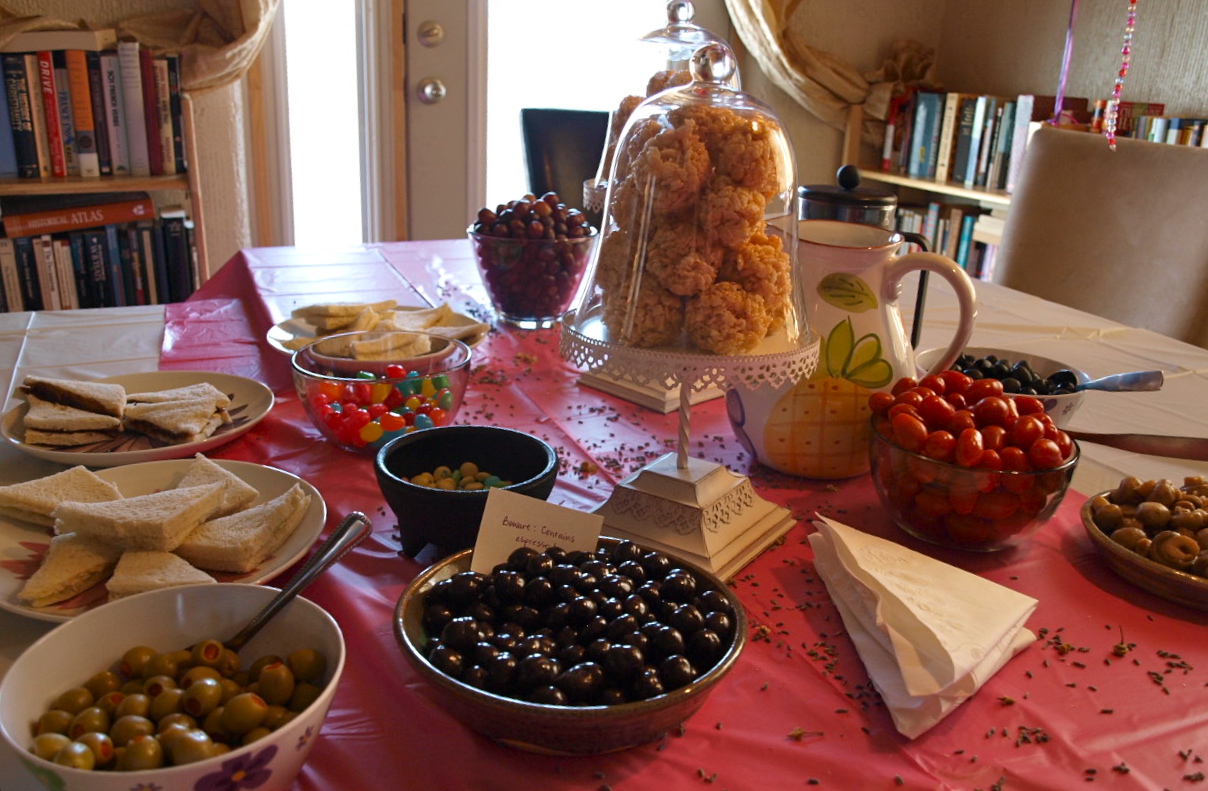
The meatball party commenced half an hour later, giving me just the right cushion of time to clear dishes and prepare for round two.  The Meatball Shop Cookbook provides numerous options, but ultimately I settled on their pork recipe.  I prepared the spicy pork meatballs the night before (ground pork shoulder, minced white bread, and hot cherry peppers ensure their spicy tenderness), and put them to heat in the oven mid-tea party.   I prepared TMS’s spicy tomato sauce to serve as an accompaniment.  I made a quick sauce of ginger ale, ketchup, barbeque sauce, and grape jelly for frozen meatballs, which I cooked in the crockpot all afternoon for the children of those we invited. (Rory declared the meatballs “dewicious!”) Because sometimes meatball ideas can be daunting, I extended the party theme to “Meatballs and Other Edible Items of a Spherical Nature,” which opened up potluck possibilities for all the guests.  Collectively, we ate the spicy meatballs and sauce on round rolls; African meatballs with green olives and an additional spicy tomato sauce; hominy in cheese sauce; a salad of miniature mozzarella balls and cherry tomatoes; marinated mushrooms; grape tomatoes; green and black olives; red and green grapes; blueberries; rice crispy spheres; energy bite balls; donut holes; chocolate-covered espresso beans; and jelly beans and M&Ms. (Other suggestions: oranges, radishes, melon balls, macadamia nuts, caviar, red hots, cheese balls, and any number of round, dough-based creations…)  Similarly inspired by TMS, my friend, Casey, served ice cream floats: root beer and vanilla ice cream for the kids; cream soda and cappuccino ice cream (and rum) for the adults.

We sat at the table well into the night, picking at our plates and laughing, while upstairs the children watched Cloudy With a Chance of Meatballs.  It was a great night… and the start of an annual tradition that I will enthusiastically repeat.  As  The Meatball Shop folks say: “You had me at balls.”

Your friend in meatball love,
Jules

Leave a comment

Filed under food, literature, travel

Cheese Love

Cheese love is real.

My partner in cooking crime, Casey, and I flew to New York City last weekend for Foodfest 2012, a four-day, whirlwind celebration of my 35th birthday that centered around our shared passion: food.

We dined at Kin Shop, Veselka, and Les Halles.  We bought food books at St. Mark’s Bookshop.  We visited the magical kingdom known as Kalustyan’s Fine Specialty Foods, which is packed with floor-to-ceiling shelving and a real estate-defying inventory, and Murray’s Cheese Shop, where the staff has a collective mischievous humor and the warmth of spirit characteristic to lovers of cheese.  My daughter, Rory, has requested a meatball party for her 5th birthday, so Casey and I diligently conducted field research at the Meatball Shop, where the vibe is fresh, fun, and informal, and the servers and kitchen staff operate under the ethos: “You had me at balls.”  (We liked the spicy pork balls with spicy sauce the best, and the cream soda float with espresso ice cream was divine.)

We also met our friends, Misael and Donella, for drinks and dancing at a Bulgarian bar called Mehanata, where we ate fries smothered in grated, melted feta (a revelation!) and were hit on relentlessly by a young man who looked barely old enough to sprout facial hair.  It was hard not to enjoy his tenacity, despite having to show him my wedding ring and repeat the phrase, “Sorry, I’m married.”  (Later that night, Misael said, “Man, Jules, dudes were hitting on you like crazy!”  I corrected him: “Dude.  Singular.  Just that one desperate homeboy, over and over, ricocheting between me and Casey like a clueless chihuahua.”  Misael laughed.)

I even enlisted a talented and imminently likeable artist named Logan Aguilar to tattoo me with the image of a fat-bellied elephant wielding a whisk.  (Thank you, Logan!  Big hugs to you and Lunchbox!)

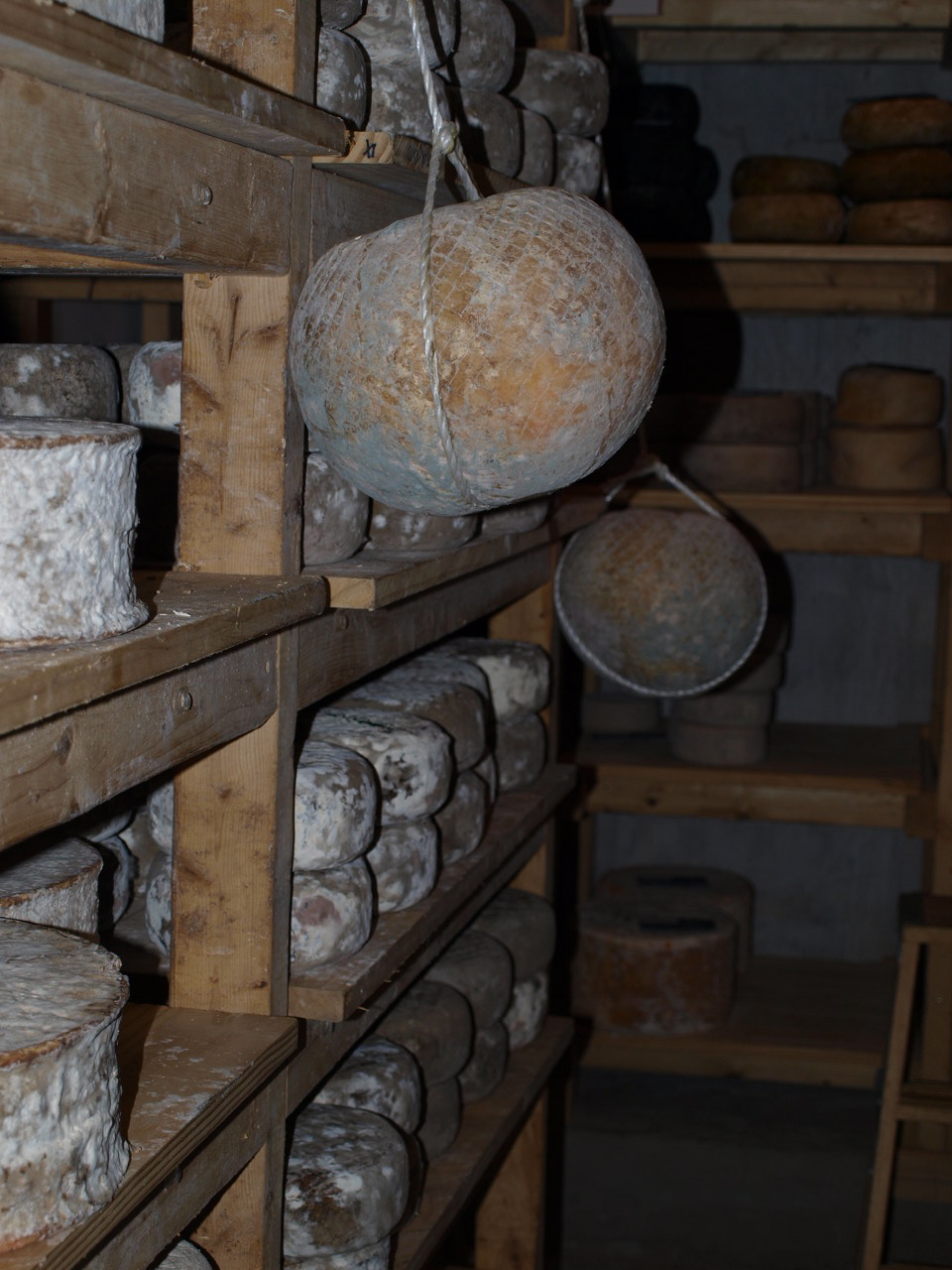
These experiences left Casey and I with a shared lexicon of playful words and one-liners that will last us a lifetime, but the pinnacle of the trip was our education in cheese: in the classroom at Artisanal Premium Cheese and in the cool, temperature- and moisture-controlled cheese caves at Murray’s Cheese Shop.  We participated in one class at each location. Our instructors differed in personality and teaching approach, creating distinct classroom experiences for their diverse group of students.  Despite those differences, we all united to commune in cheese love.

Fromager’s Favorites, at Artisanal, taught the basics of pairing wines with cheeses.  We sampled seven cheeses in a rising succession of intensities and flavor profiles, tasting each with sips from four wines (two whites, two reds).  Erin, our instructor, provided us with a framework for “grading” the pairings:

+2 – Heaven in the mouth
+1 – Pretty good
0 – Neutral
-1 and -2 – Not worth pairing and/or terrible

(Casey promptly adapted this grading scale to the following: We’d make adorable babies; Smooth and sassy, just like Jules; I might call you for a second date; and Let’s not see each other again.)

Erin led the classroom in exploration, urging us to focus on the texture and aromas of the cheeses as they mingled with the wine we drank.  We learned that some combinations enhance the flavor of the wine or the cheese or, in ideal pairings, both. I found the occasional bad pairing fascinating.  I never would have imagined that two of my favorite food groups had such potential to sabotage one another.  It was truly an illuminating experience.

At Murray’s, our instructor, Jason, who once worked the cheese cart at Picholine, led us into the basement to tour us through the cheese caves, which were constructed in painstaking replication of the caves that one might find in Europe.  Afterwards, we sampled five cheeses and were offered bottomless glasses of red table wine or sparkling white wine.  The Murray’s classroom had U-shaped seating and a wide glass wall overlooking the bustling storefront below; this contributed to a slightly less formal environment that encouraged direct interaction between students. By the end of the class, our inner sass revealed itself, prompting us to coo over our slate plates and loosen the notches of our belts.  (This shouldn’t imply that Fromager’s Favorites was void of sighing and moaning.  There were plenty of inappropriate noises at Artisanal, too.  Cheese love is real.)

I highly recommend visiting these institutions to experience their cheese classes firsthand, but, in case you can’t, here is the comprehensive list of the cheeses we sampled, along with place of origin, milk type, the notes Casey and I took, and our pairing responses:

Wines at Artisanal:
Chenin Blanc Fynbos, XF, South Africa 2010 (white)
Melon de Bourgogne Muscadet, Domaine de la Louvetrie, France 2010 (fruity white)
Tempranillo/Garnacha, Cortijo, Spain 2010 (red, my top pick)
Primitivo, Li Veli Orion, Italy 2009 (zinfandel-like, bold red, Casey’s pick)

The Artisanal Cheeses:
Piper’s Pyramid, USA, Goat: Dusted with paprika, mild but slightly pungent.  Good introductory cheese.  Casey and I both liked it paired with Tempranillo.  I thought it had a similar effect to that of beets, a natural complement that improves the flavor of both the wine and the cheese.

Lillé, USA, Cow: Salty, gooey, creamy like Brie*… but better!  I gave it three hearts, while Casey drew a smiley face with stars for eyes.  I loved it so much I shipped a wedge of it home.  As with Piper’s Pyramid, we both liked this paired with Tempranillo. Ditto for the beets comment above.  (*American Brie, which is different – some might say “lesser” – than the Brie available in France.)

Ossau Iraty, France, Sheep: Union of France and Spain; contains more protein, vitamins, and minerals than cow’s or goat’s milk.  I thought resting at room temperature improved its taste and gave it two hearts.  Casey gave it three stars and an enthusiastic “I like it!”  We both thought it paired well with the Muscadet, and it improved my perception of the Primitivo.

Epoisses, France, Cow: Erin and her husband courted over this cheese, which provides an opioid chemical effect that encourages bonding, similar to what occurs between nursing mothers and their babies.  The aftertaste was a bit bold for me, but it lessened when I breathed out through only my nose (mouth shut).  It reminded Casey of her dad.  We enjoyed this paired with the Chenin Blanc.  Casey thought it married well with the Tempranillo.

Brazos Cheddar, USA, Cow: Mild, less salty than other cheddars, smoother in texture, not as “twangy.”  Our collective wine comments can be summarized: “Meh.”

Beaufort Chalet d’Alpage, France, Cow: Grass-fed cows with a diet rich in Alpine flora, very flavorful.  Wheels typically weigh between 90-130 pounds, requiring two milkings of 45 cows to make one wheel.  Though delicious on its own, Beaufort scored neutral to low in all four wine comparisons.

Valdeon, Spain, Cow and Goat Mix: Milder blue, salty profile, creamier rather than crumblier, wheels are wrapped in sycamore leaves that contribute to their flavor.  Our appreciation of the Valdeon improved with all of the wine pairings.

The Murray’s Cheeses:
Selles-sur-Cher, Aged on site, Goat:  We sampled this at two ages.  I liked the creamy, lemony young version.  Casey preferred the aged variety, which was drier in texture, tasted “goatier,” and had a salty, umami-rich rind.

Ardrahan, Ireland, Cow: Rind washed with saltwater, lends nutty saltiness to cheese, gooey center, evocative of Brie* only with more “punch.”  I gave this cheese two hearts, and it earned a whopping five stars from Casey.  Murray’s recommends pairing it with brown ale. (*American Brie.)

Berkswell, England, Sheep:  Granular with sugar deposits from amino acids in the milk, smells like pineapple, with a rind reminiscent of the skin on a ginger rhizome.  Recommended with a smoky Pinot Noir.

Cabot Clothbound Cheddar, United States, Cow: Our top pick of the evening – nine stars from Casey.  Breaks into pieces with jagged texture (like a quartz stone) but never gets waxy, not like a typical cheddar in flavor, but wonderful… perhaps because it is rubbed with lard and elicits comments like this from Casey – “Rub me down with lard! Yummy!” – or this from our instructor, Jason: “You had me at lard.”

Fourme d’Ambert, France, Cow:  Creamy, “tame” blue cheese with a salty finish.  A lady sitting across from us declared it “smooth and sassy.”  It is purported to “convert even the staunchest blue cheese hater,” and is excellent paired with tawny Port.

Happy experimenting!


1 Comment

Filed under food, literature, travel